
“Where is my phone?” — the call you can stop taking
The commonest question a repair shop is asked has the same answer every time, and a person has to find it first. It does not have to be a person.
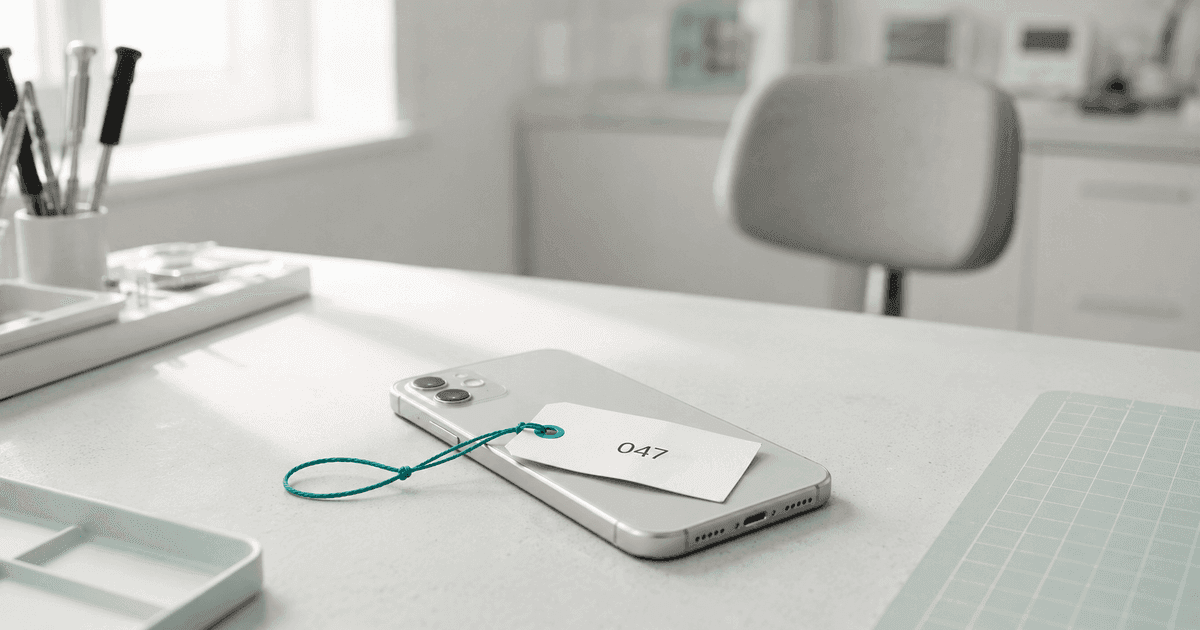
Count them one Saturday. Not the enquiries, not the bookings — just the calls that are somebody asking whether their device is ready yet.
In most shops it is between five and fifteen. Each one costs about ninety seconds, because the person answering has to find the ticket before they can say anything, and they are usually holding a screwdriver when the phone rings.
Twenty minutes a day, spent giving out information you already have.
The call is not the problem
It is tempting to treat this as an interruption to be blocked. It is not. The customer is asking a completely reasonable question about their own property, and they are asking it because there is no other way to find out.
The problem is that the only interface to that information is a human being. And a human being is slow, occasionally wrong, and busy.
What "ready" actually means to them
Three different questions arrive as the same phone call:
- Is it done? — they want to know whether to drive over.
- Is it still going to be today? — they need the phone for something.
- Has something gone wrong? — it has been longer than they expected, and silence is starting to feel like bad news.
The third one is the expensive one. Silence is where a perfectly ordinary two-day repair turns into a complaint, because nothing told them that "waiting for a part" is a normal state rather than a problem.
A link, not a portal
The instinct is to build a customer account system. Resist it. Accounts mean sign-ups, passwords, password resets, and a support burden that dwarfs the phone calls you were trying to avoid — for customers who will use it once.
What actually works is much smaller: a link that is specific to one repair, handed over on the paperwork the customer is already holding.
No account. No password. No app. A code on the receipt, a phone camera, and a page that says where that job has got to.
What belongs on that page
This is the part worth thinking about carefully, because a link anyone can open is a decision about disclosure.
Put on it: the stage the repair has reached, the device, roughly when it is due, and who is working on it. That is what the customer would be told on the phone, so there is nothing new being given away.
Leave off it: money and full identity. The price is between you and the person who authorised the work, and it does not belong on a page reachable by anyone holding the receipt — including whoever finds it on a train.
Make it forgettable to search engines. An unlisted page is not a published one. Anything of this kind should tell crawlers to stay away, and you should be able to give a link an end date or switch it off.
The stages have to be honest
A status page that only ever says "in progress" is worse than no status page, because it teaches the customer that checking is pointless and they go back to ringing.
The stages that earn their place are the ones that mean something different to the customer:
- Booked in — we have it, we have not started.
- Being worked on — someone has it open.
- Waiting for a part — this is why it is taking longer, and it is not forgotten.
- Sent away — a specialist has it. Same reassurance.
- Ready — come and get it.
That third one is the whole return on the exercise. "Waiting for a part" is the single most common cause of a repair taking longer than quoted, and it is the one thing a customer cannot guess.
Then ask, while it is fresh
The other thing a link like this is good for is the review, and the timing is the entire trick.
Asking a week later, by email, when the job is a blur and the email is in a promotions folder, gets you nothing. Asking at the moment the repair is finished — from the same link they already have open, from the phone in their hand — is a different proposition entirely.
Two rules make it worth doing. Only ask once the job is actually finished; and attach the answer to the technician who did the work, so a run of five-star jobs is attributable rather than being a fact about the shop in general.
The test
Pick your busiest day and ask one question: if a customer wanted to know where their device was at nine in the evening, could they find out?
If the answer is "they'd have to ring in the morning", the twenty minutes is still being spent — you just have not noticed it, because it is spread across the whole day in ninety-second pieces.
How this works in SlickCell Pro — the QR on the ticket, the status page, the invoice link and the review — is on Customer tracking.