
Help centreInventory & device unitsUpdated
Devices, parts and accessories are not the same thing
Why a handset is tracked one unit at a time while a screen is tracked by quantity, and what that changes day to day.
Your stock is three kinds of thing, and the app treats them differently on purpose. Getting this straight makes everything else about inventory obvious.
Parts and accessories are counted
A screen, a battery, a cable: you have eleven of them and they are interchangeable. One number, one cost, one price.
app.slickcell.com/inventory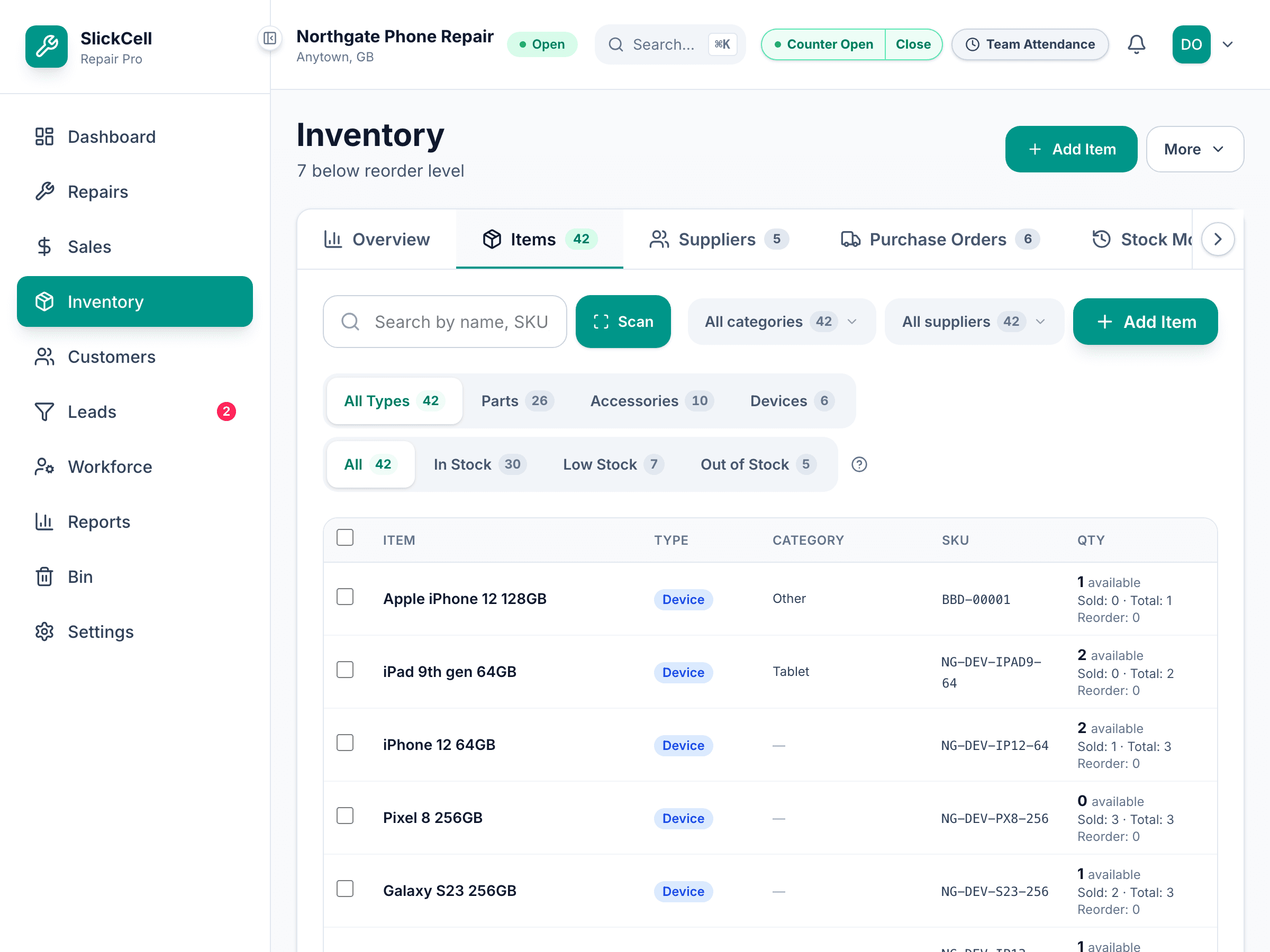
Devices are individual
Two second-hand iPhone 13s are not the same stock. One cost £215 and is in good condition; the other cost £180 and has a scratched back. Each is its own row with its own IMEI, cost, price and condition.
app.slickcell.com/inventory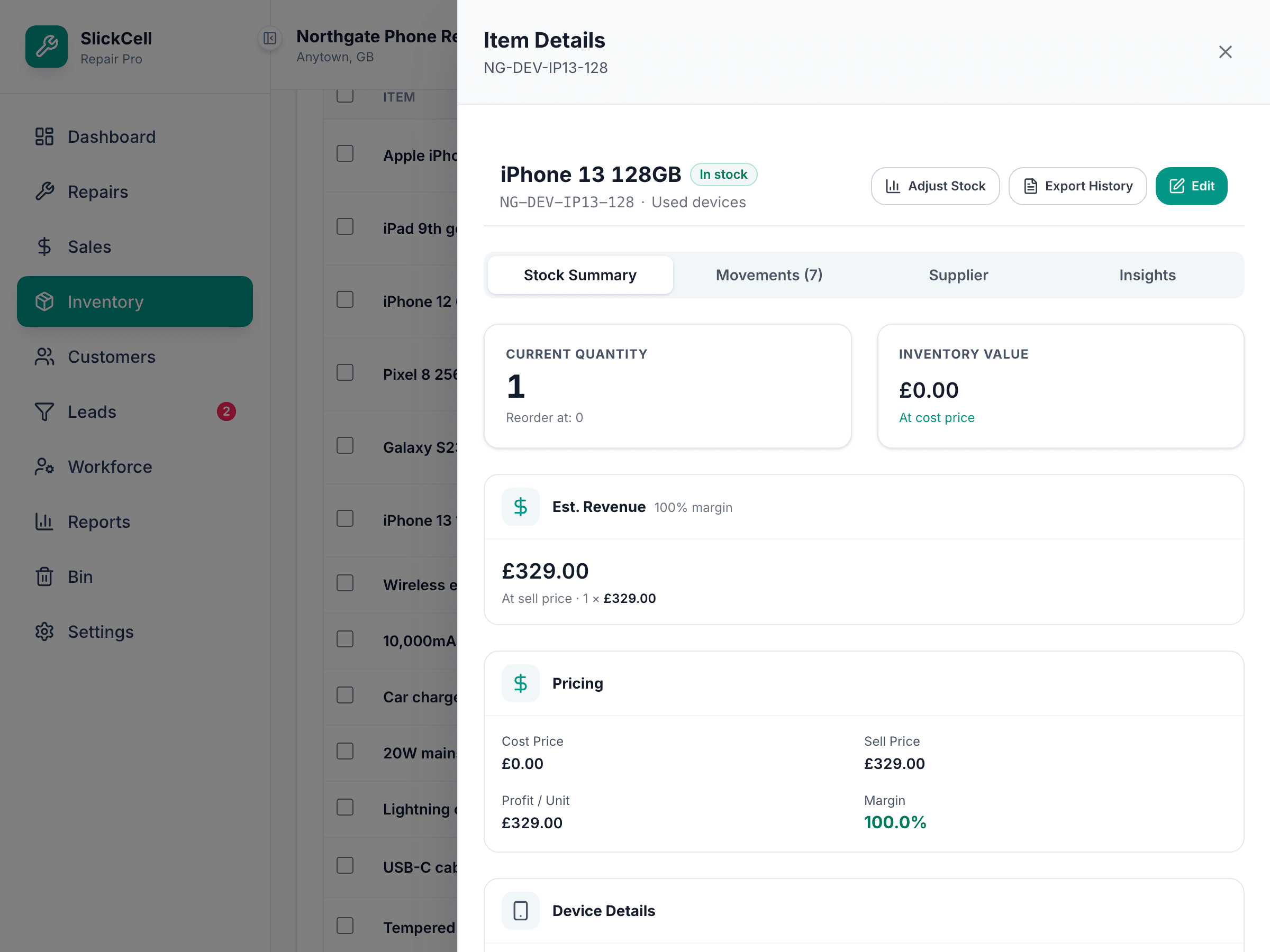
A device model's quantity is counted, not typed
Open a device product and the available figure is however many units are on the shelf. There is no quantity box, because there is nothing to type — add a unit and it goes up.
IMEI and serial are free text. A partial number, a shop reference, whatever you actually have is accepted; nothing is rejected for failing a format rule.
Selling works the same way
An accessory goes on a sale by quantity. A handset goes on as the specific unit, priced from that unit — so the till cannot sell it at a price the shelf disagrees with.
Questions that come up
- Why can I not just set a stock number?
- Because a number nobody can explain is worse than no number. Every quantity here has a movement behind it — a delivery, a sale, a repair, a stocktake — so you can always ask where it came from.